
Life does not always go according to plan. Some days bring happiness, success, and moments we want to remember forever. Other days arrive with disappointment, uncertainty, financial pressure, loss, or worries about the future. During difficult seasons, it can become easy to focus on what is missing rather than what is already present.
That is where the simple message “count your blessings” becomes meaningful.Counting your blessings does not mean pretending that problems do not exist. It does not ask you to hide sadness or force yourself to feel happy. Instead, it encourages you to recognize the good that remains even when life is difficult.
The phrase became especially well known through the Christian hymn “Count Your Blessings,” written by Johnson Oatman Jr. in 1897. More than a century later, its message continues to encourage people to replace discouragement, comparison, and worry with gratitude and trust in God.
What Does “Count Your Blessings” Mean?
- To count your blessings means to intentionally notice the good things in your life and be thankful for them.
- Some blessings are easy to recognize. A loving family, good health, a comfortable home, meaningful friendships, food, work, or financial security may immediately come to mind.
- Others are much easier to overlook.
- A peaceful morning can be a blessing. So can having someone who listens when you need to talk. Being able to breathe freely, walk outside, learn something new, laugh with someone you love, or simply have another day to live can all become meaningful when we stop long enough to notice them.
- The idea is not that gratitude makes every difficulty disappear. Rather, gratitude changes what receives our attention.
- When the mind focuses only on disappointment, it may begin to feel as though everything is wrong. When we deliberately recognize what is still good, the same life can look different.
- That change in perspective is at the heart of counting your blessings.
The Story Behind the Hymn “Count Your Blessings”
Johnson Oatman Jr. was born in New Jersey in 1856 and grew up in a home where Christian music played an important role. His father was known for his singing, and Oatman developed an appreciation for hymns while growing up around that influence.
Oatman later became a Methodist minister while also working in other professions. His greatest influence, however, came through hymn writing.
He became remarkably productive, eventually writing thousands of hymns. “Count Your Blessings,” written in 1897, became one of his best-known compositions. The melody was written by Edwin O. Excell.
- The song quickly became popular because its message was simple enough for anyone to understand.
- People experience storms.
- People become discouraged.
- People compare themselves with others.
- People carry worries.
- Yet even in those circumstances, there are reasons to remember what God has already provided.
The hymn became especially popular in Britain and was reportedly widely sung during the Welsh revival. Over time, it spread through churches and Christian communities in different parts of the world.
Its lasting appeal probably has less to do with complicated theology and more to do with a feeling nearly everyone understands: sometimes we need to be reminded of what is good.
The Hymn Begins With Life’s Difficulties
One reason “Count Your Blessings” remains meaningful is that it does not begin by pretending life is easy.
- Its opening verse describes someone being tossed by the waves of life and becoming discouraged enough to believe that everything may be lost.
- That image feels surprisingly modern.
- People today may not describe themselves as being tossed on literal waves, but they understand what emotional storms feel like.
- A family may be struggling financially.
- Someone may be waiting for medical results.
- A business owner may be worried about keeping the company alive.
- A student may feel uncertain about the future.
- Someone else may be grieving a relationship, a loved one, or an opportunity that disappeared.
- In those moments, telling someone simply to “be positive” can feel shallow.
- The deeper message of the hymn is different.
It begins by acknowledging discouragement before directing attention toward gratitude. Soul Shepherding makes a similar point, explaining that counting blessings should not mean denying problems or suppressing difficult emotions. Instead, a person can honestly acknowledge the burden while also bringing those concerns to God.
- That distinction matters.
- Real gratitude does not require pretending.
- You can be thankful and tired.
- You can have faith and still feel afraid.
- You can recognize blessings while admitting that something hurts.
- Both realities can exist at the same time.
Why Naming Blessings One by One Matters
The hymn does not merely say to remember that you are blessed. It encourages people to identify individual blessings.
- That is an important difference.
- Saying, “I have a lot to be thankful for,” is good.
- But naming specific things can make gratitude more personal.
- You might say:
- I am thankful that someone called to check on me today.
- I am thankful that my family ate dinner together.
- I am thankful that I had enough money to pay an important bill.
- I am thankful that I recovered from an illness.
- I am thankful for an opportunity I did not expect.
- I am thankful that someone forgave me.
- I am thankful for another chance to improve.
- Suddenly, gratitude becomes concrete instead of abstract.
- A blessing that seemed ordinary becomes visible.
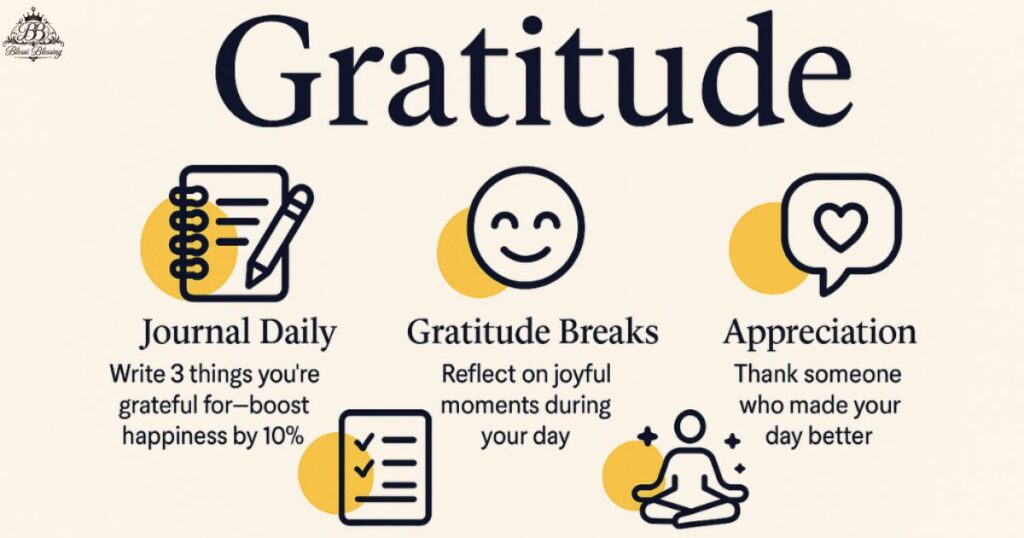
This is why keeping a gratitude journal can be so useful. At the end of each day, writing down three or five specific things you appreciated forces your attention to search for moments you may otherwise forget.
After several weeks, you may begin noticing blessings while they are happening rather than only after they are gone.
Gratitude Does Not Require a Perfect Life

One of the biggest misunderstandings about gratitude is the belief that people should feel grateful only when life is going well.
- In reality, gratitude may become most valuable when circumstances are difficult.
- The hymn repeatedly places gratitude beside hardship. It speaks about discouragement, heavy burdens, conflict, comparison, and doubt rather than describing an effortless life.
- The message is not that grateful people avoid problems.
- The message is that problems do not have to erase everything else.
- Imagine receiving ten pieces of good news and one disappointing message. It is surprisingly easy for the disappointing message to dominate your entire evening.
- The nine good things have not disappeared.
- Your attention simply moved away from them.
- Counting your blessings brings those forgotten realities back into view.
- It does not remove the painful message. It restores balance.
Count Your Blessings Instead of Comparing Your Life
Today, social media can make this comparison even stronger because people are constantly exposed to carefully selected parts of other people’s lives.
- Comparison is another important theme in the hymn.
- Human beings naturally notice what other people have.
- Someone has a larger house.
- Someone earns more money.
- Someone has a successful career.
- Someone travels more often.
- Someone appears happier.
- The problem is that comparison rarely shows the complete picture.
- We compare our ordinary Tuesday with someone else’s vacation photograph.
- We compare our private struggles with someone else’s public success.
- We see what another person owns without seeing what they worry about.
- The Tabernacle Choir’s discussion of the hymn emphasizes its movement away from envy and toward appreciation for what has already been received.
- Counting blessings interrupts comparison by asking a different question.
- Instead of asking, “Why do they have something I don’t have?” we begin asking, “What good things are already present in my own life?”
- That question often leads somewhere healthier.
Money Is Not the Only Measure of a Blessed Life

Modern culture often connects blessing with material success.
- A bigger salary.
- A better car.
- A larger house.
- More possessions.
- Greater status.
- There is nothing inherently wrong with enjoying material comfort. Financial stability can certainly make life easier.
- But the hymn makes a clear distinction between material wealth and blessings that money cannot purchase.
- Think about some of life’s most meaningful experiences.
- Trust cannot simply be purchased.
- A genuine friendship cannot be ordered online.
- Peace of mind does not automatically arrive with a higher bank balance.
- A loving family relationship must be built over time.
- Character, faith, forgiveness, wisdom, and purpose develop through experience.
Some people possess very little financially yet live with deep gratitude. Others possess almost everything they once wanted and remain dissatisfied.
Gratitude teaches us that wealth and blessing are related in some situations, but they are not the same thing.
Counting Blessings Can Deepen Faith
For Christians, counting blessings has an additional meaning.
- It is not simply recognizing positive circumstances. It is recognizing God’s presence and provision.
- Looking back can sometimes reveal help that was difficult to recognize in the moment.
- Perhaps a door closed and eventually led to a better opportunity.
- Perhaps a difficult season strengthened your character.
- Perhaps someone appeared in your life exactly when you needed support.
- Perhaps a prayer was answered differently from what you expected.
- Perhaps you survived something you once believed you could never handle.
- Remembering these experiences can strengthen faith for whatever comes next.
- If God helped before, remembering that help can provide courage today.
- That is one reason gratitude and prayer work naturally together.
- Prayer allows people to bring their worries honestly before God while gratitude reminds them that their story contains more than the current problem.
- Soul Shepherding describes this approach as bringing troubles openly to God while also recognizing spiritual blessings, comfort, and hope.
How Can You Count Your Blessings Every Day?
Gratitude becomes more powerful when it becomes a habit rather than something reserved for Thanksgiving, holidays, or special moments.
- One simple practice is to begin the morning by identifying one thing you are grateful for.
- It does not need to be dramatic.
- Perhaps you slept well.
- Perhaps there is coffee waiting.
- Perhaps the weather is pleasant.
- Perhaps you have work to do.
- Perhaps someone you love is nearby.
- Starting the day this way gives your attention a direction before messages, responsibilities, and worries begin competing for it.
- Another useful practice is ending the day with gratitude.
- Before sleeping, think about what went well.
- Who helped you?
- What made you smile?
- What problem was smaller than expected?
- What did you learn?
- What did you receive that you did not earn or expect?
- You can also express gratitude directly to other people.
- Tell someone you appreciate them.
- Thank a colleague who made your work easier.
- Send a message to a friend who supported you.
- Thank your parents, spouse, children, teacher, mentor, neighbor, or anyone whose kindness has become so familiar that you rarely mention it.
Gratitude becomes even more meaningful when it leaves your thoughts and reaches another person.
Relevant Post………Blessings for Courage: Heartfelt Prayers and Words of Strength
Look for the Ordinary Blessings
Some blessings are dramatic enough that nobody misses them.Recovering from serious illness, receiving a long-awaited opportunity, welcoming a child, surviving an accident, or achieving a major goal naturally creates gratitude.
But most life happens between major events.
That means many of our greatest opportunities for gratitude are hidden inside ordinary days.
A recent Tabernacle Choir reflection on gratitude makes this point through the simple example of breathing,something most people barely notice until it becomes difficult.
- The same idea applies elsewhere.
- Running water seems ordinary until it stops.
- Health seems ordinary until sickness arrives.
- A conversation with a parent seems routine until that person is no longer there.
- Walking seems normal until an injury makes it difficult.
- A noisy family dinner can feel inconvenient until the house becomes quiet.
- Gratitude asks us not to wait until something disappears before recognizing its value.
What Happens When You Develop a Habit of Gratitude?
Counting blessings does not guarantee that every day will feel wonderful.
- You will still face disappointment.
- You will still have difficult conversations.
- Plans will still fail.
- People will still hurt you.
- Unexpected bills will still arrive.
- Grief and uncertainty will remain part of human life.
- The difference is that hardship is less likely to become the entire story.
- Gratitude creates room for another sentence:
- “This is difficult, but it is not everything.”
- That sentence can be powerful.
- It reminds us that pain and goodness can coexist.
- A difficult year can contain meaningful friendships.
- A stressful job can still provide valuable opportunities.
- A season of grief can contain moments of love.
- An uncertain future can exist beside memories of past provision.
- The goal is not constant happiness.
- The goal is perspective.
Count Your Blessings When Life Feels Heavy
- There will be moments when gratitude comes naturally.
- There will also be moments when counting blessings feels almost impossible.
- Those may be the moments when the practice matters most.
- Start small.
- You do not need a list of fifty things.
- Find one.
- Then another.
- Perhaps someone cares about you.
- Perhaps you have survived difficult seasons before.
- Perhaps you learned something from today’s struggle.
- Perhaps tomorrow still contains possibilities you cannot see yet.
- Perhaps your faith reminds you that you are not facing the journey alone.
- One blessing may lead to another.
- That is the simple wisdom behind a hymn written more than a century ago.
Final Thoughts
“Count Your Blessings” has endured because its message speaks to a problem that has never disappeared. Human beings easily notice what is wrong, what is missing, and what other people seem to have.
Gratitude asks us to look again.Counting your blessings does not erase pain, deny disappointment, or promise an easy life. It simply prevents difficulty from hiding every good thing that remains.
Some blessings will be obvious.Others may look ordinary until you pay attention.A conversation. A meal. A friend. A lesson. A second chance. A quiet morning. A prayer answered in an unexpected way. The strength to continue after a difficult day.
When you begin naming those things one by one, you may discover that your life contains more goodness than you realized.And sometimes that discovery is enough to change how you face tomorrow.
Frequently Asked Questions
What does “count your blessings” mean?
“Count your blessings” means taking time to notice and appreciate the good things in your life. It encourages gratitude, especially during stressful or difficult times.
Who wrote the hymn “Count Your Blessings”?
The hymn “Count Your Blessings” was written by Johnson Oatman Jr. in 1897. The music was composed by Edwin O. Excell.
What is the main message of “Count Your Blessings”?
The main message is to focus on gratitude instead of becoming overwhelmed by problems, disappointment, or comparison. The hymn encourages people to remember the good things God has provided.
Is counting your blessings a Christian practice?
Counting blessings is commonly connected with Christian gratitude and faith, but the basic practice of appreciating good things in life can be meaningful to anyone.
How can I count my blessings every day?
You can write down a few things you are thankful for, reflect on positive moments before bed, pray with gratitude, or simply pause during the day to notice something good.

